
 EN
EN
In the fast-paced world of commercial baking, meeting time-sensitive orders while maintaining consistent quality presents one of the industry's greatest challenges. Large bakeries serving restaurants, hotels, catering companies, and retail chains face constant pressure to deliver perfectly baked goods within tight deadlines. The solution that has revolutionized commercial baking operations lies in the advanced technology and efficiency of bakery convection ovens. These specialized units have become the backbone of high-volume production facilities, enabling bakeries to scale their operations while ensuring uniform results across every batch.
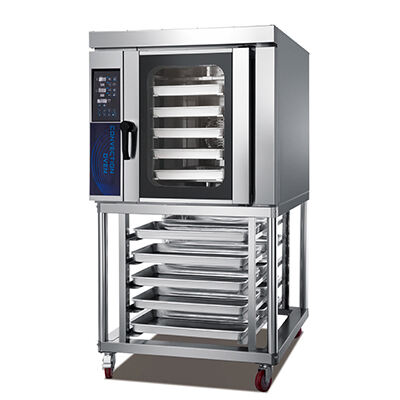
The fundamental advantage of bakery convection ovens stems from their superior heat distribution mechanism. Unlike conventional ovens that rely on radiant heat, convection systems utilize powerful fans to circulate heated air throughout the cooking chamber. This continuous air movement creates uniform temperature zones, eliminating hot spots and cold areas that commonly plague traditional baking equipment. For large bakeries handling multiple product lines simultaneously, this consistency translates directly into reduced waste, improved product quality, and enhanced operational efficiency.
Enhanced Heat Distribution Technology
Forced Air Circulation Systems
Modern bakery convection ovens employ sophisticated forced air circulation systems that maintain precise temperature control throughout the entire cooking chamber. The strategic placement of high-velocity fans ensures that heated air reaches every corner of the oven interior, creating an environment where baked goods receive consistent thermal treatment regardless of their position on the racks. This technology eliminates the need for manual rotation or repositioning of products during the baking process, significantly reducing labor requirements and minimizing the risk of temperature fluctuations caused by frequent door openings.
The circulation patterns in professional bakery convection ovens are engineered to complement different baking requirements. Adjustable fan speeds allow operators to customize airflow intensity based on the specific characteristics of each product. Delicate pastries benefit from gentler circulation that prevents surface damage, while dense bread loaves require more aggressive air movement to ensure thorough heat penetration. This versatility makes convection systems ideal for bakeries producing diverse product portfolios within the same production cycle.
Temperature Uniformity Across Multiple Racks
One of the most significant advantages of bakery convection ovens lies in their ability to maintain consistent temperatures across multiple rack levels simultaneously. Traditional deck ovens often exhibit temperature variations between different shelf positions, forcing bakers to adjust timing and positioning for each batch. Convection technology eliminates these inconsistencies by continuously mixing the air within the chamber, ensuring that products on the top, middle, and bottom racks receive identical thermal treatment.
This temperature uniformity enables large bakeries to maximize their oven capacity without compromising product quality. Full rack loading becomes possible without the typical concerns about uneven baking or varying doneness levels. The result is increased throughput capacity that directly impacts the bakery's ability to fulfill time-sensitive orders while maintaining the high standards expected by commercial clients. Professional bakers report productivity increases of up to 40% when transitioning from conventional ovens to modern convection systems.
Reduced Baking Times and Energy Efficiency
Accelerated Heat Transfer
The accelerated heat transfer capabilities of bakery convection ovens significantly reduce baking times compared to conventional alternatives. The continuous movement of heated air creates a more efficient thermal exchange between the oven environment and the baked goods, allowing products to reach their optimal internal temperatures more rapidly. This efficiency gain translates into faster batch turnover rates, enabling bakeries to increase their daily production volumes without extending operating hours or adding additional equipment.
Time savings become particularly crucial during peak demand periods when bakeries must fulfill multiple large orders simultaneously. The ability to complete baking cycles 20-30% faster than traditional methods allows production managers to build buffer time into their schedules, providing flexibility to accommodate last-minute orders or unexpected demand spikes. This operational agility proves invaluable for bakeries serving the hospitality industry, where timing requirements can shift rapidly based on event schedules or seasonal fluctuations.
Optimized Energy Consumption
Energy efficiency represents another compelling advantage of modern bakery convection ovens. The enhanced heat transfer efficiency means that these units can operate at lower temperatures while achieving the same baking results as conventional ovens running at higher settings. This temperature reduction, combined with shorter baking cycles, results in substantial energy savings that accumulate significantly over the course of daily operations in large commercial facilities.
Advanced insulation systems and precise temperature controls further optimize energy consumption in professional bakery convection ovens. Digital panels enable operators to program specific temperature profiles for different products, ensuring that energy is used only when and where needed. The combination of efficient heating elements, superior insulation, and intelligent controls can reduce energy costs by 15-25% compared to older oven technologies, providing substantial cost savings that improve overall profitability.
Versatility in Product Range and Batch Sizes
Multi-Product Capability
Large commercial bakeries benefit enormously from the versatility that bakery convection ovens provide in handling diverse product ranges. The precise temperature control and uniform heat distribution allow these units to accommodate everything from delicate croissants and pastries to hearty artisan breads and pizza bases within the same production day. This flexibility eliminates the need for specialized equipment for each product category, reducing capital investment requirements and simplifying production scheduling.
The programmable controls found in modern convection systems enable operators to store multiple baking profiles, each optimized for specific product types. These presets include temperature settings, fan speeds, humidity levels, and timing parameters tailored to achieve optimal results for each item in the bakery's product lineup. The ability to switch between different baking modes quickly ensures that production flow remains smooth even when fulfilling orders that require multiple product types within tight timeframes.
Scalable Production Capacity
Scalability represents a critical factor for growing bakery operations, and bakery convection ovens excel in providing flexible production capacity that can adapt to changing demand patterns. The efficient use of oven space allows bakeries to increase output without necessarily expanding their physical footprint or investing in additional units. Full rack utilization capabilities mean that production capacity can be maximized during peak periods while remaining cost-effective during slower seasons.
The modular nature of many commercial convection systems allows bakeries to expand their capacity incrementally as their business grows. Additional units can be integrated into existing production lines without major infrastructure modifications, providing a cost-effective path for capacity expansion. This scalability proves particularly valuable for bakeries serving growing client bases or expanding into new market segments that require increased production volumes.
Quality Control and Consistency Benefits
Standardized Baking Results
Consistency in baked goods quality is paramount for large bakeries serving commercial clients who expect identical products with every delivery. Bakery convection ovens provide the precise environmental control necessary to achieve this level of standardization. The uniform heat distribution and programmable controls ensure that each batch meets the same exact specifications, eliminating the variability that can occur with less sophisticated baking equipment.
This consistency extends beyond just appearance to include texture, moisture content, and overall eating quality. Commercial clients, particularly those in the restaurant and hospitality industries, depend on receiving products that meet their exact requirements every time. The reliability of convection baking technology allows bakeries to guarantee this consistency, building stronger client relationships and reducing the risk of rejected orders or quality complaints.
Reduced Product Waste
Product waste reduction represents a significant economic benefit for large bakery operations utilizing convection technology. The superior heat control and uniform baking environment dramatically reduce the occurrence of overbaked, underbaked, or unevenly cooked products that must be discarded or sold at reduced prices. This improvement in success rates translates directly into better profit margins and more efficient use of raw materials.
Professional bakery convection ovens also enable better monitoring and control of the baking process, allowing operators to make real-time adjustments when necessary. Digital displays provide precise feedback on temperature, timing, and humidity levels, enabling proactive management that prevents quality issues before they occur. This level of control helps bakeries maintain their reputation for quality while optimizing their operational efficiency.
Operational Efficiency and Labor Optimization
Streamlined Production Workflows
The implementation of bakery convection ovens significantly streamlines production workflows in large commercial facilities. The ability to load multiple racks simultaneously and achieve consistent results across all positions reduces the complexity of production scheduling and minimizes the skill level required for oven operation. This simplification allows bakeries to optimize their labor allocation and reduce training requirements for new employees.
Automated features available in modern convection systems further enhance operational efficiency. Programmable timers, automatic temperature adjustments, and integrated cooling cycles reduce the need for constant operator attention during baking processes. This automation allows skilled bakers to focus on product development, quality control, and other value-added activities while less experienced staff can manage routine baking operations effectively.
Improved Production Scheduling
The predictable baking times and reliable results provided by bakery convection ovens enable more accurate production scheduling, which is crucial for meeting time-sensitive delivery requirements. Production managers can plan their daily schedules with greater confidence, knowing that each batch will complete within expected timeframes and meet quality standards. This predictability reduces the need for contingency planning and emergency production runs that can disrupt normal operations.
The ability to maintain consistent production schedules also improves inventory management and raw material planning. Bakeries can optimize their ingredient ordering and storage processes based on reliable production forecasts, reducing waste and improving cash flow management. This operational efficiency becomes particularly valuable during high-demand periods when precise coordination between all aspects of production is essential for success.
Advanced Features for Commercial Applications
Digital Control Systems
Modern bakery convection ovens incorporate sophisticated digital control systems that provide unprecedented precision in managing baking parameters. These systems offer touchscreen interfaces that allow operators to monitor and adjust temperature, humidity, fan speed, and timing with remarkable accuracy. The ability to fine-tune these variables enables bakeries to optimize their processes for each specific product, achieving results that would be impossible with manual controls.
Data logging capabilities built into these digital systems provide valuable insights into production efficiency and quality trends. Operators can track baking cycles, identify optimization opportunities, and maintain detailed records for quality assurance purposes. This data-driven approach to bakery management helps large operations continuously improve their processes and maintain competitive advantages in demanding commercial markets.
Integrated Safety and Monitoring Features
Safety considerations are paramount in large commercial bakery operations, and modern convection ovens include comprehensive safety features designed to protect both equipment and personnel. Automatic shut-off systems, temperature alarms, and ventilation monitoring ensure that units operate within safe parameters at all times. These safety features reduce the risk of accidents and equipment damage while providing peace of mind for operators working in fast-paced production environments.
Remote monitoring capabilities allow production managers to oversee multiple bakery convection ovens from a central location, ensuring consistent operation across all units. This centralized control is particularly valuable for large facilities operating multiple production lines simultaneously or for bakery chains managing several locations. The ability to monitor performance metrics and receive alerts about potential issues enables proactive maintenance and prevents costly production disruptions.
FAQ
What makes bakery convection ovens more suitable for time-sensitive orders than traditional ovens
Bakery convection ovens excel at meeting time-sensitive orders due to their faster baking times, achieved through efficient forced air circulation that accelerates heat transfer. The uniform temperature distribution allows for full rack loading without quality concerns, increasing production capacity by up to 40%. Additionally, the consistent results reduce the risk of batch failures that could delay order fulfillment, while programmable controls enable precise scheduling and predictable completion times.
How do convection ovens help maintain product consistency in large-scale operations
Product consistency is maintained through the uniform heat distribution created by forced air circulation, which eliminates hot spots and temperature variations throughout the oven chamber. Digital controls allow operators to save and replicate exact baking parameters for each product type, ensuring identical results across all batches. The precise temperature control and monitoring capabilities enable real-time adjustments that prevent quality variations, critical for commercial clients who expect standardized products with every delivery.
What are the energy efficiency benefits of using bakery convection ovens in commercial settings
Energy efficiency in bakery convection ovens comes from their ability to achieve optimal baking results at lower temperatures and shorter time cycles compared to conventional ovens. The enhanced heat transfer efficiency reduces overall energy consumption by 15-25%, while advanced insulation and digital controls optimize energy usage based on specific baking requirements. These savings accumulate significantly in large commercial operations, improving profitability while reducing environmental impact.
Can bakery convection ovens handle multiple product types simultaneously without compromising quality
Yes, modern bakery convection ovens are designed to handle diverse product types through adjustable fan speeds, programmable temperature profiles, and uniform heat distribution systems. The ability to customize airflow intensity and temperature settings allows delicate pastries and robust bread products to be baked successfully within the same unit. Digital control systems store multiple baking profiles, enabling quick transitions between different product requirements while maintaining consistent quality standards across all items.
Table of Contents
- Enhanced Heat Distribution Technology
- Reduced Baking Times and Energy Efficiency
- Versatility in Product Range and Batch Sizes
- Quality Control and Consistency Benefits
- Operational Efficiency and Labor Optimization
- Advanced Features for Commercial Applications
-
FAQ
- What makes bakery convection ovens more suitable for time-sensitive orders than traditional ovens
- How do convection ovens help maintain product consistency in large-scale operations
- What are the energy efficiency benefits of using bakery convection ovens in commercial settings
- Can bakery convection ovens handle multiple product types simultaneously without compromising quality